News

Hampshire Care Awards 2018
Hampshire Care Awards 2018

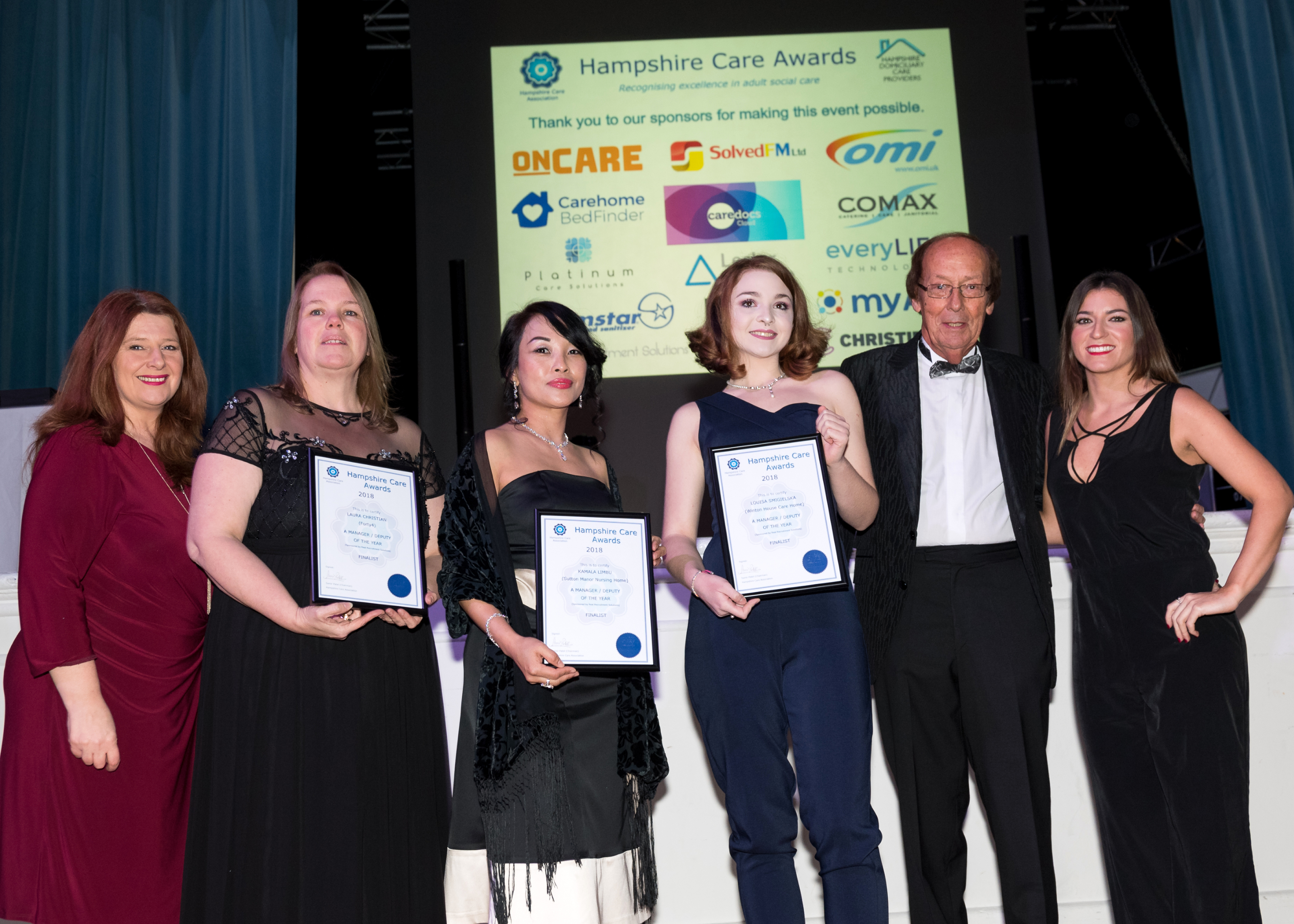
The annual Hampshire Care Association Care Awards were held on the 30th November 2018 and presented by Fred Dinenage. We are a devoted patron of the association and a willing sponsor to make sure the awards go ahead each year. The awards are a fantastic showcase for people who have dedicated themselves to their profession and deserve to be recognised for their outstanding contributions. It is important for us that we sponsor the awards and provide the platform for people to enjoy themselves and be rewarded for their efforts.

Our Healthcare Recruitment Specialist, Sonja Klajderic, was given the duty of presenting the award that we were sponsoring ‘Residential Care Manager/ Deputy of the Year’. In this category there were three worthy nominees but the overall winner was Louisa Smigielska. Unfortunately and very sadly, Louisa passed away after a brave battle with cancer on the 4th December 2018. Quoting the Hampshire Care Association “Louisa was an inspirational woman and care manager and will be sorely missed”.


The night followed with many other awards including:

  • Residential Care Nurse of the Year
  • Homecare Care Worker of the Year
  • Residential Care Non-Care Employee of the Year
  • Homecare Non-Care Employee of the Year
  • Residential Care Chef / Cook of the Year
  • Residential Care Newcomer of the Year
  • Homecare Newcomer of the Year
  • Residential Care Lifetime Achievement in Care
  • Residential Care / Nursing Home of the Year
  • Homecare Provider of the Year
  • HCA Blue Rose Award

It was amazing to see such a wide variation of people that have all contributed in different ways to the healthcare sector. The winners and nominees were so genuinely proud of their recognition and humbled to be nominated by their peers. The Hampshire Care Association should be proud of putting on such a great awards show which captured the professionalism, courage and hard-work that makes up the healthcare sector and ensures that the service provided to people still remains at our disposal.

Christmas Tree Wonderland- Dorset Tourism Association Networking Event

Christmas Tree Wonderland- Dorset Tourism Association Networking Event

They say good things come to those who wait and this must have felt like an eternity for everyone involved in bringing the idea of Christmas Tree Wonderland to life. Delivering a talk at Hot Rocks, Bournemouth for a Dorset Tourism Association networking event, Jon Weaver (Head of Resort Marketing & Events Bournemouth and Poole Tourism (Bournemouth Borough Council)) detailed the hard work and dedication that him and his team has put in to formulating an event of this enormity. Jon was captivating in his own humble manner, underselling the meticulous planning and man hours that he himself has dedicated to this project for a number of years.

There was one huge challenge facing Jon and his team; how can they make Bournemouth a top Christmas destination when it doesn’t have the capability for a highly competitive Christmas market? Surrounding areas such as Winchester, Salisbury and Southampton have been running some of the UK’s finest Christmas markets for many years and have been increasing footfall within the locations every festive period. The question that then arose was ‘what is Bournemouth’s unique selling point (USP)?’’. The answer was then quickly realised, what Bournemouth does have is a beautiful garden trail running from the commercial town square straight to the beachfront; the perfect festive USP.

During his talk Jon explained how the whole dynamic of Christmas within towns has fundamentally changed over recent years with tourists now anting experiential trips instead of the best shopping destination. Providing an experience can create a greater sense of community and local pride, this therefore became the primary objective in order to make Bournemouth a competitive Christmas destination. Christmas Tree Wonderland was the idea that was created, a magical prospect that combined both the distinctive USP and the growing trend towards experiential tourism.  It was important for large forces to come together and provide the correct funding and support so that the trees could be implemented across the town centre. Both the Town Centre Bid and Coastal Bid have been crucial in providing the necessary tools, along with a number other providers such as the Mogul’s Ice Rink and Bar, the Alpine Lodge Bar by Seventa Events, Bournemouth Borough Council and more. It is important that gratitude is expressed to these groups and that their hard work is recognised across the town as they have successfully delivered a wonderful event.

Christmas Tree Wonderland has already blown most of us away, with over 100 beautifully decorated trees spanning across a carefully thought out trail. The trail has trees that are dedicated to specific cities (the Seattle tree is a modern must-see), more traditional trees and then in the centre of the Lower Gardens is the glorious main attraction- the UK’s largest light-programmable Christmas tree that creates a tunnel-like effect as you pass under (pictured above). This may sound like more than enough but there is still much more to come as we approach Christmas.

During the Dorset Tourism Association event we were lucky enough to witness the magic of the main tree during one of its scheduled half-hour shows in which the tree begins to play everybody’s favourite Christmas music and creates various different light patterns. Jon then explained that in December, the main tree will see the introduction of animations and there will be various different animated shows that will take place at certain times throughout the day; a remarkable feat for the team to achieve. In addition to this, Bournemouth’s big wheel will have pyro audio shows beginning in December which will occur every weekend in the build up to Christmas. It certainly is an exciting time to be a Bournemouth resident, as long as you’re not too bothered by the thousands of non-locals that will definitely be increasing footfall this festive period!

A special thank you to the Dorset Tourism Association and Hot Rocks for putting on this talk and to Jon Weaver for allowing us to listen about the great work that has happened behind the scenes over many years.


By Kyle Ward

Marketing Assistant- Real Recruitment Solutions

Migrant worker numbers decreasing ahead of Brexit

Migrant worker numbers decreasing ahead of Brexit

Brexit is looming and with all the confusion regarding the likelihood of Theresa May’s deal being passed, some consequences are beginning to occur within the UK. The UK is decreasingly being recognised as a destination of choice for migrants that are looking for work overseas. The uncertainty shrouding the nation has clearly become a discouragement in the decision-making process.

A decrease in migrant workers entering the country does serve some unhealthy disadvantages in the UK job market. The CIPD has stated that the shortage will lead to greater skills and labour shortages in the UK. Companies will find it increasingly difficult to employ the right talent as the market will be even less in their control. This has already been evident in recent years as the UK has become a candidates market; the candidates feel they are more important to the organisation than the organisation is to them. Companies are also having to increase the wage rates in order to better attract candidates to their roles specifically, allowing them to identify as an employer of choice for both UK-resident workers and migrants.

With the confusion most likely to continue post-Brexit, the UK is faced with a serious challenge of pushing itself to become an attractive place to live and work again for migrants. The systems that will be put into place for people entering the country will need to be fair, simple and still encouraging in order for the UK not to suffer a severe labour and/or skills shortage. Current staff could struggle in this shortages scenario and will be affected negatively as this would potentially incur a greater workload or a loss of orders due to staff shortages.

The UK’s approach to loneliness

The UK’s approach to loneliness

Loneliness has always been prevalent in society but its relevance to overall health issues (predominantly mental health) has been frequently overlooked. Current Prime Minister Theresa May has begun the process of taking extra steps to prevent the occurrence of loneliness in society and allow it to become an issue that can be discussed openly among UK residents.

The initial concentration is on the elderly and highlighting how big the issue is within the older generations and to encourage people to tackle loneliness, rather than ignoring it. By 2023 all GPs in England will be able to conduct the process of ‘social prescriptions’; this means that patients can be referred to take part in community activities or voluntary services. Therefore, allowing patients that are struggling with loneliness to become more active socially and physically. The Prime Minister has also been in discussion for another preventative measure that will coincide with the social prescription and has enlisted the help of the postal services to make this a reality. Postal workers will be tasked with speaking to isolated individuals and trying to reconnect them to the community or their families; giving the individuals an opportunity to communicate socially.

The approach to loneliness however, does not stop with the elderly. Further measures are being taken to assure that the UK is open in discussion about this issue and proactive in finding ways to prevent extreme cases. An ‘employer pledge’ is being introduced to ensure that the correct treatments are taking place in the workplace and that employers are attempting to maintain the well-being of their employees both physically and mentally. Mental health in the workplace is a growing discussion and this is another example of implementing conditions to support employees.

Furthermore, with the advancements of technology in society, the Government is also looking into how this impacts mental health and loneliness. The Minister of loneliness and the Minister for digital and creative industries are exploring the possibilities of educating people through schools and specialised courses to prevent technology having massive impacts on the rate of lonely individuals now and in the future.

The Government and Theresa May in particular are taking loneliness very seriously and are tackling it head on to encourage discussion and support the mental health of UK residents; a step in the right direction.


Sources:

Government launches first loneliness strategy

UK workers support positive sustainability in organisations

UK workers support positive sustainability in organisations

For many years now, the tendency towards supporting brands which operate with the intentions to maintain a higher level of sustainability has been a growing trend; this has mainly been evident in consumer purchasing decisions. However, more recently, this has been becoming prominent for employees choosing their next place of work.

The current UK jobs market is effectively candidate-driven, with employers trying their best to market themselves as an employer of choice. This means that the organisations are having to showcase to the candidates what makes them better to work for than their competitors, this can be done by offering benefits packages, higher salaries or by utilising the ethical approach that the business takes towards its employees and the world, to portray themselves as different. The latter is becoming the more important to UK employees as more people are becoming aware of sustainability and beginning to support it to greater extents. This is particularly evident in the younger generations entering the job market.


A recent study by NMD showed that:

“Younger workers go even further with over two-fifths (42%) saying they would take a pay cut if it meant they could work for a company that had a positive impact and purpose in the world” (Recruiting Times 2018)


Therefore, the new talent entering the job market will seek organisations that offer them the ability to support ethical issues at work and not just in their personal lives.

Employees are also relating their own personal happiness within their jobs to the prominence of the ethical considerations that take place at their workplace. Many UK workers have a tendency to feel more positive towards their organisation if they feel that they are contributing towards the improvement of sustainability in the UK. The workers are attempting to be the driving force behind the green movement.

What does mean for businesses?

If not already, organisations are going to have to take much greater steps to improve their sustainability and then try their best to promote this to potential employees; the problem that occurs with this is the process of greenwashing, businesses exaggerating their efforts or even falsifying them to better appeal to people. It is important that organisations operate transparently and only release information that they can prove. If a business is found to be falsely advertising this will have a massively negative effect for their reputation as both an employer and a brand of choice in the current market.

Businesses have to act according to the demands of the working population if they are to secure the appropriate talent and this particular demand for operating sustainably is only going to grow greater in the coming years. If a business can market themselves successfully and have a proactive approach, rather than reactive, they could have a unique advantage as an employer of choice.

Sources:

UK workforce attracted to companies who are making a positive impact

The future of the construction industry?

The future of the construction industry?

The construction industry is one of the most susceptible to a revolution of mechanisation. There are many external factors that are affecting the current climate within the sector, the most prominent being Brexit. The process of leaving the EU is still very uncertain and is edging towards a ‘no-deal’ scenario each and every day that passes, whether this is the case or not, any Brexit deal will have large implications upon construction.


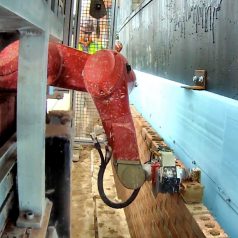
Leaving the EU will in turn make migration harder for any current EU individuals wishing to enter the country. The job market is directly affected by this as there will be a decrease in technical skills entering the country, especially construction-related skills. The solution could therefore lie in the hands of technology, the robot hands of technology.


Recent studies show that many construction bosses and large companies are expecting to see the implementation of machines to conduct such tasks as bricklaying, which will see a rapid increase in efficiency and productivity. The move is not a decision that organisations are overly choosing to make, but one they are being forced to due to the depletion of skilled labourers in the present and even more so in the future. Some processes within construction sites are already automated, mostly with the use of drones to check on the progress of the sites and conduct certain aspects of surveying. It is not likely that construction will become a fully automated industry as senior roles will remain people-operated and the overseeing of the machines could create new roles. These new opportunities will be mainly surrounding specialist care and maintenance of the technologies used; much like the manufacturing responsibilities that are now prevalent in car manufacturing.


Many large manufacturers are already trying to push out their designs into the market and move forward the process of mass change. The big questions are now, how rapidly will these changes incur and whether the automation will lead to higher rates of unemployment among labourers in the construction sector.

DCHA Meeting September- Affina Organisational Development

DCHA Meeting September- Affina Organisational Development

Last month I was lucky enough to be invited to attend one of the Dorset Care Home Association’s meetings, this is due to Real Recruitment Solutions being a patron of the association and us taking a keen interest in the sectors we recruit for. The meeting was very interesting and there were several guest speakers for several different topics. As a non-healthcare savvy individual, some of the information was difficult for me to process but I listened eagerly to try and learn more about a profession which has its fair share of challenges. The meeting was well organised and the variety in attendees allowed for informative topical conversation which was beneficial to the healthcare professionals.


All being said, there was one segment in the meeting which I personally found to be the more engaging, however, this was mainly due to its relatability across numerous sectors. The talk was given by Sarah-Jane Dale, the chief operating officer of Affina Organisation Development (AOD) and detailed how working in teams can create for efficient results in the workplace. At first I was sceptical, I was sure that I had heard the same regurgitated information about team-based working enough times; I was wrong. Sarah challenged the attendee’s notions surrounding the concept of a team and stripped it back to basics to start with. We were asked how we would define a team, what characteristics make a good team and whether those characteristics are present in the teams we are already a part of. The talk was engaging in this sense as it allowed us to reconsider the knowledge we already possessed and attempt to apply the new knowledge to the situations we currently find ourselves in. The next section discussed the aims and objectives of team working, questioning our understanding of effective aims/objectives and how we measure these against our performance. This understandably is an important part of team efficiency and can provide the best results if aims and objectives are set correctly, people are informed and then they are carried out accordingly. Sarah displayed a strong understanding of this topic and then proceeded to present us with numerous facts and figures to support the application of greater team-based working in the healthcare sector. The most substantial exploration within the evidence was how mortality rates can be greatly affected by the standards of care provided to the service users; the standards rising when the carers are working for a mutual aim or objective. I found that what I learned throughout this small talk was very applicable in many situations and/or professions, not just healthcare.


Overall, I thoroughly enjoyed my experience at this meeting and it was a great learning experience for me. As well as the AOD talk, I was intrigued to find out more about the other talks such as adult safeguarding and how this is a hot topic currently in the sector. All the information I received was delivered by people who are passionate about their work and this was reflected also in the attendees, making for a space abundant with intellectuality.


For more information on the Dorset Care Home Association or Affina Organisational Development please visit:

http://www.affinaod.com/

http://www.dorsetcare.co.uk/


Sources:

Sarah-Jane Dale- Affina Organisational Development (2018)